Why Christian Worship Music Feels Different — The Spiritual Power Behind Church Songs
There is something about worship music that reaches places ordinary songs cannot. A melody rises in a crowded church and suddenly tears flow, hands lift, and hearts open. It is not entertainment. It is not performance. It is encounter. This article explores why Christian worship music carries a spiritual weight that secular music simply does not — and why African church traditions have understood this truth for generations.
Why the Bible Encourages Singing to God
Scripture overflows with commands to sing. "Sing to the Lord a new song, for He has done marvellous things" (Psalm 98:1). The Book of Psalms — the longest book in the Bible — is essentially a hymnal. King David did not merely recite his prayers; he sang them, accompanied by harp and lyre.
In the New Testament, Paul instructs the early Church: "Speak to one another with psalms, hymns, and spiritual songs. Sing and make music from your heart to the Lord" (Ephesians 5:19). Notice the phrase "from your heart." Worship music is not about vocal talent or musical production — it is about the posture of the soul.
When a congregation sings together, something supernatural happens. Individual voices become one voice. Personal burdens become shared prayers. The act of singing creates a sacred space where God's presence is welcomed and recognised.
How Worship Music Strengthens Faith
There is a reason believers remember hymn lyrics decades after learning them. Worship music embeds theology into memory. A child who grows up singing "Amazing Grace" carries its message of redemption into adulthood — not as abstract doctrine, but as lived truth set to melody.
Neuroscience confirms what the Church has always known: music activates regions of the brain associated with emotion, memory, and social bonding simultaneously. When worship lyrics declare God's faithfulness, the brain processes this not merely as information but as experience. The believer does not just know God is faithful — they feel it.
This is why worship music sustains faith during suffering. When words fail, a familiar hymn carries the prayer. Many believers testify that during their darkest seasons — grief, illness, financial hardship — it was a worship song, not a theological lecture, that kept their faith alive.
The Difference Between Entertainment Music and Worship Music
Entertainment music is designed to please the listener. Worship music is designed to honour God. This distinction changes everything — the purpose, the atmosphere, and the spiritual effect.
A pop song may make you tap your foot. A worship song may bring you to your knees. The difference is not merely in the lyrics or the melody — it is in the intention. Worship is directed upward, toward God. It is prayer set to music. It is confession, gratitude, surrender, and praise woven into melody.
This does not mean worship music must be slow or sombre. African gospel traditions prove the opposite — worship can be exuberant, rhythmic, and full of joyful noise. What matters is the heart behind the sound. As Jesus said, "God is Spirit, and His worshippers must worship in Spirit and in truth" (John 4:24).
Why African Church Music Feels So Powerful
Anyone who has attended an African church service — whether Catholic, Pentecostal, or mainline Protestant — knows that the worship experience is visceral. The singing is not passive. The congregation does not sit quietly while a band performs. Everyone participates. Everyone sings. Everyone moves.
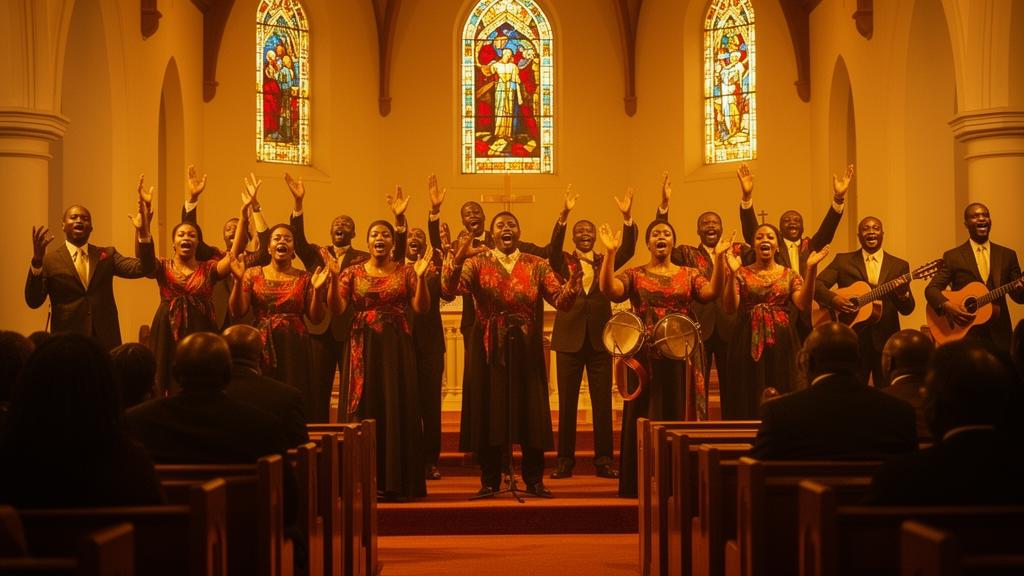
In Zimbabwean churches, worship is communal prayer. A Shona hymn sung by two hundred voices in a rural parish carries the weight of collective faith. The rhythm of drums, the clapping of hands, the harmonies that seem to arise naturally — these are not rehearsed performances. They are the sound of a community encountering God together.
African worship music draws from a rich oral tradition where songs carry stories, theology, and communal identity. A single hymn may reference Scripture, honour ancestors of faith, and declare God's sovereignty over present struggles — all in three minutes. This layered meaning gives African church music its extraordinary depth.
The call-and-response pattern common in African worship creates active participation. When a worship leader sings a line and the congregation responds, every person becomes a co-creator of the worship experience. No one is a spectator. This is why visitors to African churches often say, "I have never experienced worship like that before."
Worship Across Different Church Traditions
The way Christians worship through music varies beautifully across traditions, yet the core purpose remains the same — to glorify God and draw near to Him.
- Catholic liturgical music uses ancient chants, hymns, and responsorial psalms that follow the Church's liturgical calendar. The music is woven into the structure of the Mass itself.
- Pentecostal worship tends toward spontaneous, Spirit-led singing with contemporary instruments, extended praise sessions, and prophetic songs.
- Anglican and Methodist traditions treasure historic hymnody — the works of Charles Wesley, John Newton, and others — sung with organ accompaniment and choral precision.
- African Independent Churches blend indigenous musical forms with Christian theology, creating worship that is distinctly African and deeply biblical.
Each tradition offers a unique window into the same truth: God inhabits the praises of His people (Psalm 22:3).
When Singing Becomes Spiritual Warfare
Scripture records a remarkable event in 2 Chronicles 20. When King Jehoshaphat faced an overwhelming enemy army, God's instruction was astonishing: "Send the singers ahead of the army." As the choir began to sing praises, God set ambushes against the enemy, and the battle was won without Israel lifting a sword.
Paul and Silas, beaten and imprisoned in Philippi, sang hymns at midnight. An earthquake shook the prison, chains fell off, and doors flew open (Acts 16:25–26). Their worship was not a concert — it was warfare.
Many African Christians understand worship as spiritual warfare intuitively. The midnight prayer tradition often includes worship songs because believers know that praise displaces darkness. When you sing God's truth over your home, your family, and your circumstances, you are not merely expressing feelings — you are wielding a spiritual weapon.
How to Deepen Your Worship Life
Whether you worship in a grand cathedral or a small rural church, here are ways to deepen the spiritual power of your singing:
- Sing with intention. Before the music begins, quiet your heart and direct your attention to God. Worship is not about the sound you make — it is about the One you address.
- Learn the lyrics. Understand what you are singing. Many hymns contain profound theology. Study the words as you would study Scripture.
- Worship at home. Do not limit worship to Sunday services. Play worship music during your family devotions, during your commute, during your quiet time.
- Sing even when you do not feel like it. Worship is not dependent on emotion. Sometimes the most powerful worship happens when you choose to praise God in the midst of pain.
- Teach children to worship. The songs they learn now will anchor their faith for life.
"Let everything that has breath praise the Lord. Praise the Lord!"
— Psalm 150:6