Christianity in Zimbabwe — Faith, Culture & the Power of Gospel Music
Zimbabwe is a nation where faith and culture are inseparable. Over 80% of the population identifies as Christian, and the church — whether Catholic, Protestant, Pentecostal, or African Independent — is woven into every layer of community life. At the heart of Zimbabwean Christianity stands gospel music: not as entertainment, but as prayer, identity, and communal expression. This article explores how Christianity took root in Zimbabwe, how it shaped the nation's musical traditions, and why gospel choirs remain one of the most powerful cultural forces in the country.
How Christianity Came to Zimbabwe
Christian missionaries arrived in what was then Rhodesia in the mid-19th century. The Jesuits, Dominican Sisters, and London Missionary Society were among the earliest, establishing missions that combined evangelisation with education and healthcare. The Catholic Mariannhill Missionaries and the Methodist, Anglican, and Dutch Reformed churches all planted roots during this era.
These missions built schools and hospitals that remain pillars of Zimbabwean society today. Institutions like Kutama College (where Robert Mugabe was educated by Marist Brothers), Gokomere Mission, and Driefontein Mission became centres of learning and faith. The Catholic Church alone operates hundreds of schools and health facilities across the country.
Christianity did not simply replace indigenous belief systems — it engaged with them. Many Zimbabwean Christians hold a worldview that integrates their ancestral heritage with Christian faith. This synthesis is particularly visible in worship, where African musical forms, call-and-response patterns, and communal participation are infused with Christian theology.
The Catholic Church in Zimbabwe
The Roman Catholic Church is one of Zimbabwe's largest Christian denominations, with eight dioceses overseen by the Zimbabwe Catholic Bishops' Conference (ZCBC). The Church has been a consistent voice for social justice, education, and reconciliation, particularly during the liberation struggle and subsequent political challenges.
Catholic worship in Zimbabwe is a living fusion of Roman liturgy and African expression. The Mass follows the universal structure — Liturgy of the Word and Liturgy of the Eucharist — but the music is distinctly Zimbabwean. Shona hymns from the Hosanna hymnbook and Ndebele hymns from the Ingoma collection provide the musical foundation of every Catholic Mass in the country.
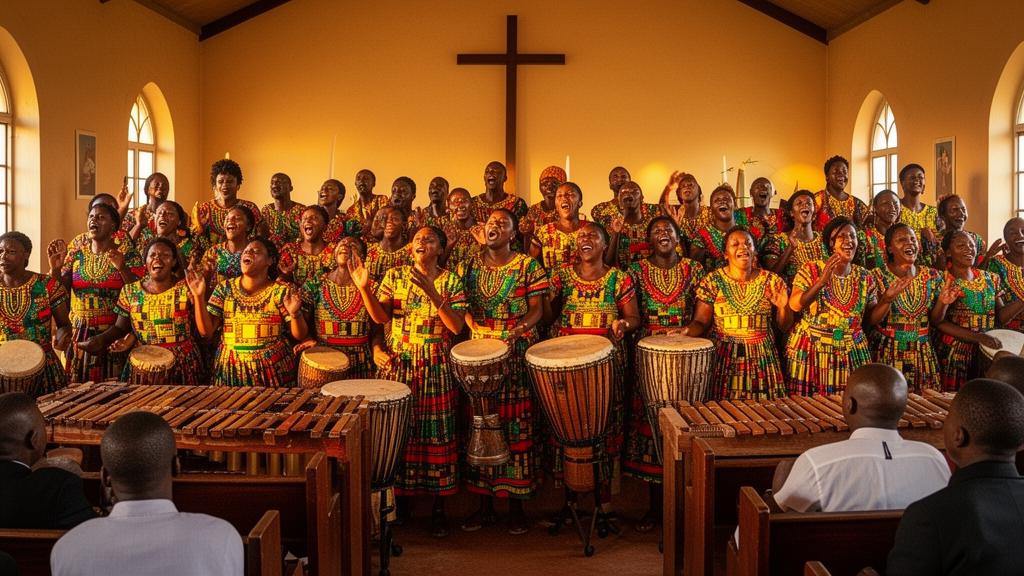
Parish choirs are the heartbeat of Catholic worship in Zimbabwe. Every parish has at least one choir — many have several, including youth choirs, women's guilds, and men's groups. Choir competitions and gatherings are major social events that strengthen inter-parish bonds.
The Catholic devotional life in Zimbabwe is also vibrant. Families pray the daily prayers in Shona or daily prayers in Ndebele. The Holy Rosary is prayed in homes, at funerals, and during parish gatherings. These practices bind Zimbabwean Catholic communities together across urban and rural divides.
Why Gospel Choirs Are Central to African Church Life
In Zimbabwe, the church choir is not a performance group — it is a ministry. Choir membership carries spiritual responsibility. Rehearsals begin and end with prayer. New songs are discerned, not merely composed. The choir leads the congregation into worship, and the congregation responds not as audience but as participants.
Zimbabwean church choirs sing in rich, multi-part harmonies that are the inheritance of a deep musical culture. The Shona and Ndebele languages lend themselves beautifully to choral music — their tonal qualities create natural melodies that European hymnody cannot replicate. When a Zimbabwean choir sings, the music does not sit on the surface — it reverberates in the body.
Major Catholic choir gatherings — such as diocesan music festivals and the National Catholic Music Festival — draw thousands of participants and spectators. These events are celebrations of faith, culture, and community identity. They showcase new compositions, honour veteran choir directors, and inspire the next generation of worship leaders.
The Role of Church Music in Community Gatherings
In Zimbabwe, music marks every significant life event within the Christian community. Births are celebrated with hymns of thanksgiving. Weddings feature hours of choral music — from processional hymns to reception songs. Funerals, perhaps the most musically rich gatherings, include extended periods of hymn singing that comfort the grieving and honour the departed.
The pungwe — the all-night prayer vigil — is a distinctly Zimbabwean practice with roots in both the liberation struggle and indigenous cultural ceremonies. During a pungwe, the community gathers from evening until dawn, singing, praying, reading Scripture, and sharing testimony. The music sustains the gathering through the night, creating a sacred space of communal endurance and faith.
Church music also serves a social function. Choir rehearsals provide safe gathering spaces for young people. Music ministries offer creative outlets in communities with limited entertainment options. For many Zimbabweans, the church choir was their first experience of organised music-making — a foundation that has produced internationally acclaimed artists.
How Christian Faith Shaped Zimbabwean Gospel Traditions
Zimbabwean gospel music is a genre unto itself — distinct from American gospel, Nigerian gospel, or South African gospel. It draws from several sources:
- Catholic hymnody: The Hosanna and Ingoma hymnbooks provided a structured musical education for generations of Catholic choristers.
- Methodist and Anglican hymn traditions: Wesley hymns and Anglican chants were adapted into Shona and Ndebele, creating new musical forms.
- Indigenous musical traditions: The mbira (thumb piano), hosho (shakers), and ngoma (drums) were integrated into Christian worship, creating a sound that is uniquely Zimbabwean.
- Pentecostal influence: The growth of Pentecostal churches brought contemporary worship styles, electronic instruments, and a more spontaneous approach to worship leading.
The result is a rich musical tapestry. A single Zimbabwean church service might include a Latin-origin hymn sung in Shona, a contemporary praise song with keyboard and drums, and a traditional call-and-response chant accompanied by hand-clapping — all within the same hour.
Why Spiritual Songs Carry Deep Emotional Meaning
For many Zimbabweans, gospel songs are inseparable from the most significant moments of their lives. A particular hymn may be associated with a grandmother's funeral, a child's baptism, or a season of answered prayer. The music carries memory, and memory carries faith.
During Zimbabwe's economic challenges, gospel music became a lifeline. When inflation soared, when power cuts darkened homes, when prospects seemed bleak, the church continued to sing. Songs like "Mwari Ndiye Mufudzi Wangu" (The Lord Is My Shepherd) and "Jesu Ndiye Shamwari" (Jesus Is My Friend) carried families through seasons of hardship with hope intact.
This is the power of worship music rooted in real experience. It is not abstract theology — it is lived testimony set to melody. Every note carries the weight of genuine faith tested by genuine struggle.
"The Lord is my strength and my song; He has given me victory."
— Exodus 15:2