What the Bible Says About Music, Singing & Worship
Music is not an afterthought in God's design. From the first chapters of Genesis to the final visions of Revelation, Scripture is saturated with song. The Bible contains over 400 references to singing and dozens of commands to make music to the Lord. This article traces the golden thread of music through Scripture and reveals why singing is not optional for the believer — it is essential.
Music in the Old Testament — From Creation to the Temple
The first mention of a musician in the Bible appears in Genesis 4:21 — Jubal, "the father of all who play stringed instruments and pipes." Music is woven into humanity's story from the very beginning.
The most significant musical moment in the Old Testament is arguably the Song of Moses and Miriam in Exodus 15. After God delivered Israel through the Red Sea, the entire nation burst into song: "I will sing to the Lord, for He is highly exalted. Both horse and driver He has hurled into the sea" (Exodus 15:1). Miriam took a tambourine and led the women in dancing and singing. This was not a rehearsed performance — it was spontaneous, communal, Spirit-filled worship.
Why David Used Music During Prayer
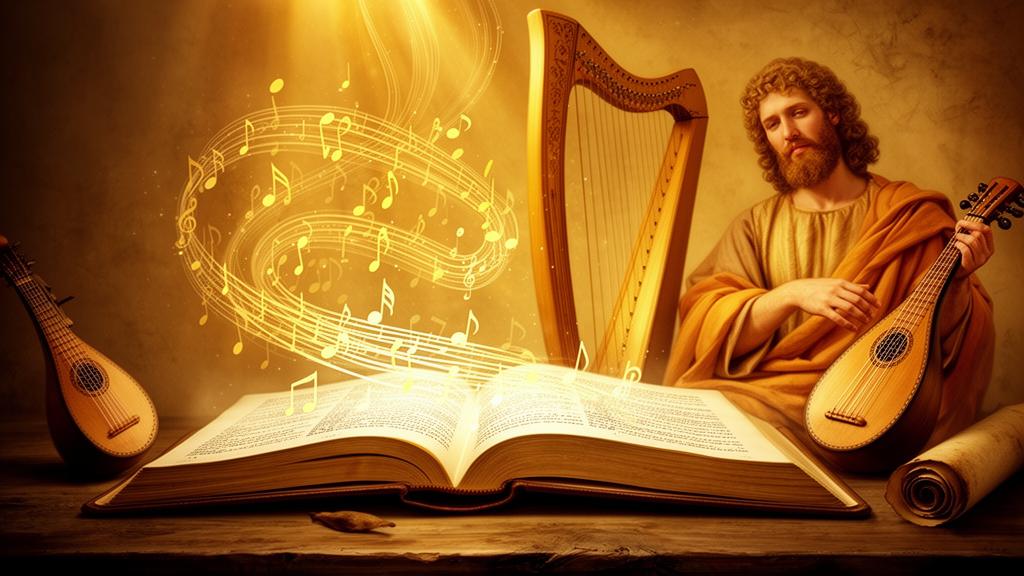
King David is the Bible's greatest worship leader. A shepherd boy who became a king, David understood that music was a direct line to God's heart. He wrote at least 73 of the 150 Psalms — songs that cover every human emotion: joy, grief, repentance, rage, wonder, and praise.
David did not separate music from prayer. For him, they were the same thing. When he danced before the Ark of the Covenant (2 Samuel 6:14), he was praying with his entire body. When he composed Psalm 23 — "The Lord is my shepherd, I lack nothing" — he was setting theology to melody.
David also organised Temple worship on an enormous scale. He appointed 4,000 Levites specifically to praise God with musical instruments (1 Chronicles 23:5). He created a detailed roster of singers and musicians who ministered before the Lord day and night. Worship was not a side activity in David's kingdom — it was central to national life.
How Early Christians Used Hymns
The New Testament church inherited the Jewish tradition of singing psalms and developed its own hymnody. Paul's letters contain fragments of what scholars believe were early Christian hymns — sung by believers in house churches across the Roman Empire.
Philippians 2:6–11, the great "Christ Hymn," declares: "He humbled Himself by becoming obedient to death — even death on a cross! Therefore God exalted Him to the highest place." This passage was likely sung, not merely read, in early Christian gatherings.
Colossians 3:16 instructs: "Let the word of Christ dwell in you richly, teaching and admonishing one another in all wisdom, singing psalms and hymns and spiritual songs, with thankfulness in your hearts to God." Notice that Paul connects singing with teaching. Worship music was — and remains — a vehicle for doctrine.
The Book of Revelation portrays heaven itself as a place of continuous worship. The four living creatures sing "Holy, holy, holy is the Lord God Almighty" (Revelation 4:8). The redeemed sing "a new song" before the throne (Revelation 14:3). If heaven is filled with music, then earthly worship is a rehearsal for eternity.
Why Singing Is Spiritual Warfare
The Bible presents singing not only as an act of praise but as a weapon against spiritual darkness. When David played his harp for King Saul, the evil spirit tormenting Saul would depart (1 Samuel 16:23). Music, anointed by God, has the power to dispel demonic oppression.
In 2 Chronicles 20, King Jehoshaphat faced an overwhelming enemy. God's battle plan was astonishing: "Appoint singers to go ahead of the army, singing praise to the Lord" (2 Chronicles 20:21). As they sang, God set ambushes against the invaders, and the battle was won through worship alone.
Paul and Silas, imprisoned in Philippi, sang hymns at midnight. An earthquake shook the prison foundations, chains broke, and doors opened (Acts 16:25–26). Their worship was not a coping mechanism — it was a spiritual offensive.
This principle is alive in the midnight prayer tradition practised in many African Christian homes. Believers understand that worship in the night watch is a declaration of God's sovereignty over every form of darkness.
How Worship Songs Become Modern-Day Psalms
The Psalms were the worship songs of ancient Israel — written in response to real experiences of joy, suffering, deliverance, and longing. Today's worship songs serve the same purpose. A hymn written during a season of national crisis becomes a psalm of lament. A song born from personal testimony becomes a psalm of thanksgiving.
In Zimbabwe, many Shona hymns function as modern psalms — sung during Mass, at funerals, at weddings, and during family devotions. These songs carry communal memory and collective faith. When a congregation sings a hymn that their grandparents also sang, they are connecting across generations in worship.
The Bible invites us to write new songs: "Sing to the Lord a new song, His praise from the ends of the earth" (Isaiah 42:10). Every generation is called to add its voice to the great chorus of faith. The hymns being composed today in African churches, in Latin American communities, and in Asian congregations are the psalms of our time.
Key Bible Verses About Music and Worship
"Sing to the Lord a new song, for He has done marvellous things." — Psalm 98:1
"Praise Him with the sounding of the trumpet, praise Him with the harp and lyre." — Psalm 150:3
"Speak to one another with psalms, hymns, and spiritual songs." — Ephesians 5:19
"Is anyone happy? Let them sing songs of praise." — James 5:13
"About midnight Paul and Silas were praying and singing hymns to God." — Acts 16:25
"Let everything that has breath praise the Lord!" — Psalm 150:6