The Catholic Church in the Early Middle Ages — Faith That Shaped Civilisation
When the Roman Empire crumbled in the fifth century, it was the Catholic Church that stepped into the void — not merely as a religious institution but as the single most stabilising force across a fractured continent. From the windswept monasteries of Ireland to the grand basilicas of Rome, the Church wove together the spiritual, intellectual, and political fabric of what we now call the early Middle Ages.
The Birth of Christendom
The concept of Christendom — a unified Christian civilisation governed by shared faith — did not appear overnight. It grew gradually as Germanic tribes, who had conquered Rome's western provinces, embraced Catholicism. The baptism of the Frankish king Clovis around 496 AD marked a turning point. By accepting the faith of the Church rather than the Arian heresy favoured by many Germanic leaders, Clovis aligned his kingdom with Rome and set a precedent for centuries of partnership between crown and altar.
This alliance reshaped the political landscape of Europe. Rulers sought the Church's blessing to legitimise their authority, while popes increasingly acted as mediators in disputes between kingdoms. The coronation of Charlemagne as "Emperor of the Romans" by Pope Leo III on Christmas Day, 800 AD, symbolised the mature expression of this ideal — a Christian empire guided by faith.
Monasteries: Lighthouses of Learning
If the Church was the heart of medieval civilisation, monasteries were its lifeblood. Following the Rule of Saint Benedict — a sixth-century guide that balanced prayer, manual labour, and study — communities of monks became the custodians of knowledge during an era often mischaracterised as the "Dark Ages."
In scriptoriums across Europe, monks painstakingly copied manuscripts of Scripture, classical philosophy, medical texts, and agricultural treatises. Without their efforts, works by Aristotle, Virgil, and the Church Fathers would have been lost forever. The great monastic centres — Monte Cassino in Italy, Clonmacnoise in Ireland, Lindisfarne in England — functioned as schools, hospitals, and agricultural research stations all at once.
Irish monks, in particular, played an outsized role. Figures like Saint Columba and Saint Columbanus carried their faith and learning to Scotland, France, and as far as Switzerland, founding monasteries that became hubs of civilisation in regions still emerging from paganism.
The Papacy as a Unifying Force
During the early medieval centuries, the Bishop of Rome — the Pope — evolved from a primarily spiritual leader into a figure of immense political and moral authority. Pope Gregory the Great (590–604) is perhaps the best example. He reorganised the Church's administration, dispatched missionaries (most famously Augustine of Canterbury to evangelise England), negotiated with invading Lombards, and authored influential theological works.
Gregory also championed liturgical music — what we now call Gregorian chant — standardising the musical worship that echoes through Catholic churches to this day. His vision of the papacy as a servant-leader rather than a worldly prince set the tone for centuries of papal teaching.
Art, Architecture, and Sacred Beauty
The early medieval Church did not merely preserve old culture; it generated new forms of breathtaking beauty. The Book of Kells, created around 800 AD in an Irish-Scottish monastery, remains one of the most magnificent illuminated manuscripts ever produced. Its intricate Celtic knotwork and vivid colours express a theology of glory — that the Word of God deserved the finest artistic expression humanity could offer.
In architecture, the Romanesque style emerged: thick stone walls, rounded arches, and sturdy towers designed to last for eternity. These churches were not merely places of worship but visual catechisms — their sculptures, frescoes, and stained glass taught the faith to a largely illiterate population.
Education and the Seeds of the University
Long before the founding of Oxford or the Sorbonne, the Church ran Europe's only educational system. Cathedral schools and monastic schools taught the trivium (grammar, rhetoric, logic) and quadrivium (arithmetic, geometry, music, astronomy), preserving the classical liberal arts tradition. These schools would eventually evolve into the great medieval universities — every one of which was founded under the Church's patronage.
Challenges and Reforms
The early medieval Church was not without struggles. Simony (the buying and selling of church offices), lay investiture (secular rulers appointing bishops), and the moral failings of some clergy prompted repeated reform movements. The Cluniac reform of the tenth century, originating from the monastery of Cluny in Burgundy, called for a return to strict Benedictine observance and freedom from secular interference. This movement revitalised religious life across Europe and laid the groundwork for the more dramatic reforms of the High Middle Ages.
A Living Legacy
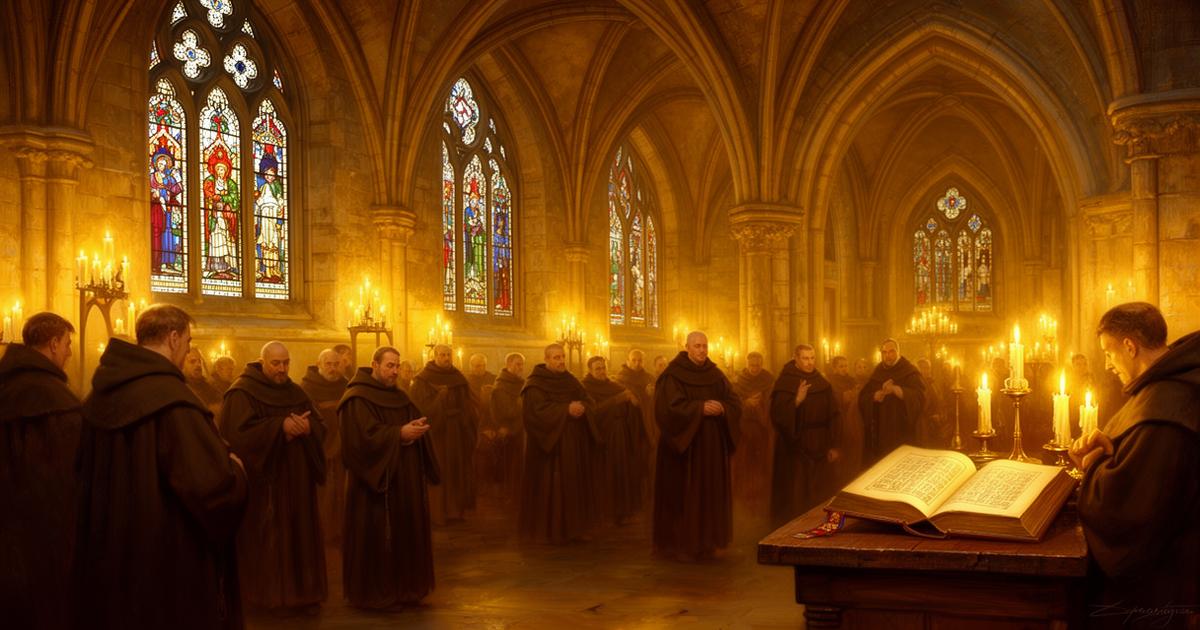
The Catholic Church's role in the early Middle Ages was nothing short of civilisational. It preserved the intellectual heritage of antiquity, Christianised the peoples of Europe, developed systems of education and charity, and produced art and music that continue to inspire. The chants first sung in those candlelit stone churches still echo in Catholic liturgies today — including the beautiful Shona hymns and Ndebele hymns sung in Zimbabwe's churches, which carry forward this ancient tradition of worship through sacred song.
Understanding this history deepens our appreciation of the faith handed down through the centuries — a faith that survived empires, transformed cultures, and continues to sustain over a billion believers worldwide.